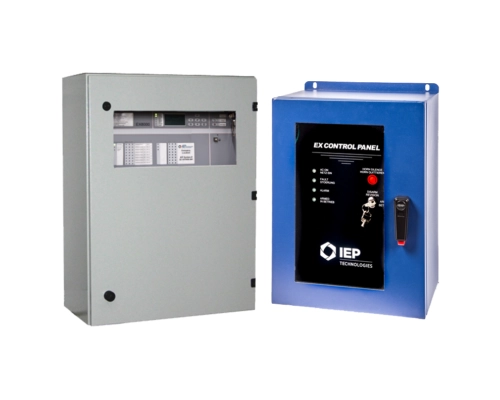
Since 1956, the company now known as IEP Technologies (previously Fenwal) has been in the business of saving lives by preventing explosions in process-related industries. Whether manufacturing food, pharmaceuticals, or chemicals, or processing wood, plastics or even metals—just about every industry creates combustible dusts and environments that must be protected from deflagrations and explosions.
IndustriCorp, Inc., partnering with IEP Technologies, provides the best-in-technology explosion protection equipment and designs to protect your process and facility, and most of all, allow your personnel to return home to their families in the same healthy condition in which they arrived at work.
IEP Technologies fields the largest team of highly trained service technicians in the industry, enabling the best response time to any service needs to keep your production lines running.
Different Methods of Explosion Protection
Explosion Vents
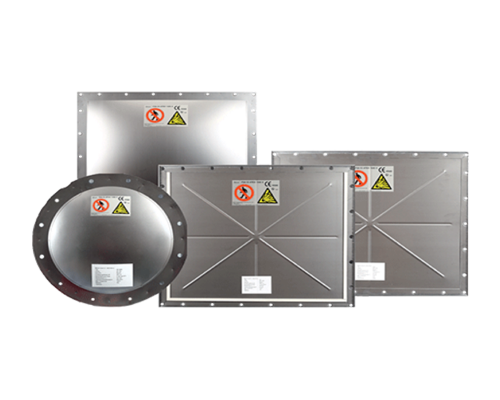
Usually the most economical from an equipment cost standpoint, explosion vents are engineered panels designed to rupture at a preset pressure point, preventing the rupturing of the vessel on which they are installed.
Advantages
3 to 5 day lead time for shipment minimizes downtime and the need to manage inventory
Standard sizes allow for ease of selection
Choice of flat, domed, and curved vent panels provide the right venting protection for each application
Custom vent panel sizes, configurations, and ratings also available
Proven design provides fast and reliable operation with 100% venting efficiency
Easy to install and maintain vent panels reduce plant operating costs
Designed in accordance with NFPA 68 and requirements and ATEX-certified
Can withstand normal clean-in-place (CIP) procedures
Flameless Vents
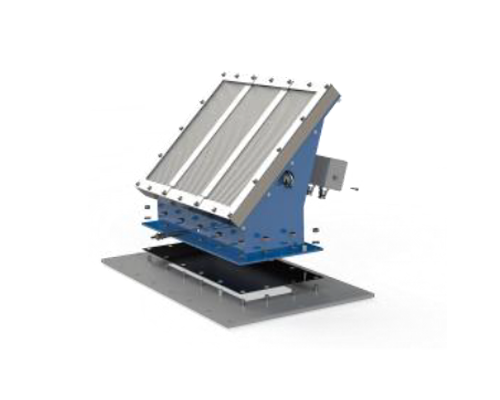
These may be used in some circumstances where the emission of the fire and debris from the rupturing of an explosion panel cannot be safely vented. The flameless vents are designed to remove the highest temperatures of the deflagration and the debris while allowing for pressure release.
Advantages
Allows explosion relief venting to be applied in areas where flame ejection cannot be permitted
Proven design provides fast, reliable operation
Suitable for venting applications where the use of a vent duct is not practical or feasible
Requires minimal maintenance
Suppression
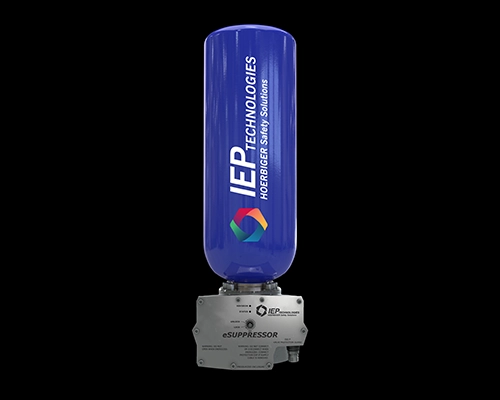
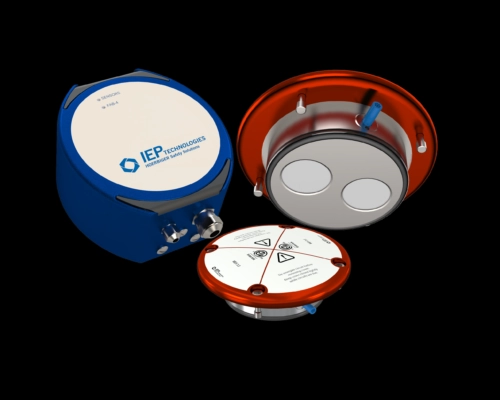
IEP Explosion Suppression Systems establish the state-of-the-art explosion protection technology. The IEP Smart DS Explosion Detector System uses rate of rise dynamic pressure sensing, coupled with the FAB-4 Field Connection Box, to analyze the sudden pressure rise within the protected vessel.
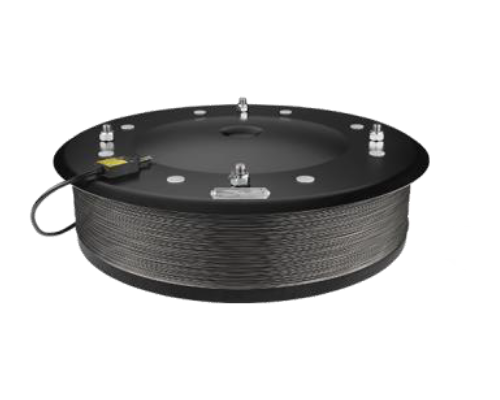
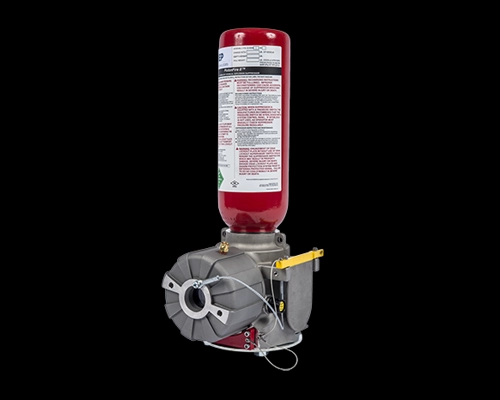
If determined to be an indication of an impending explosion, the system activates extinguisher(s), which inject the suppressant reducing the heat energy, thereby preventing an explosion.
The entire process happens within milliseconds, preventing damage to the vessel and surrounding personnel. These engineered active systems are designed specifically for the systems and vessels to which they are applied and have proven to prevent equipment and facility damage while most importantly saving lives.
Isolation
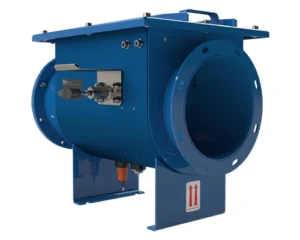
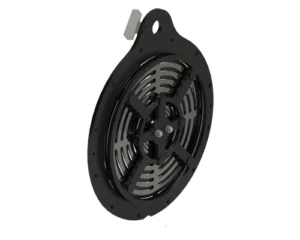
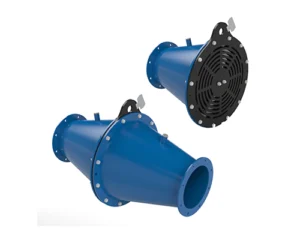
Explosion isolation is incorporated into most all-protection scenarios, preventing the propagation of deflagrations and explosions from one vessel to another. IEP Technologies provide both passive and active isolation protection equipment.
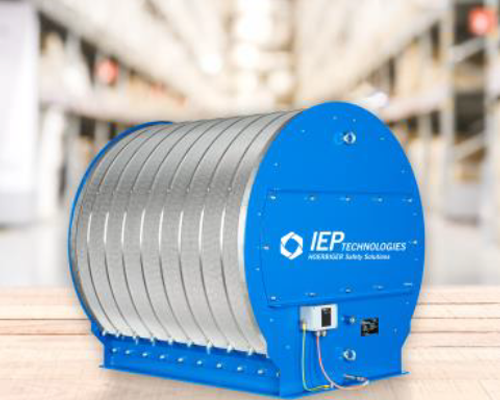
Passive protection uses the pressure wave of a sudden deflagration to activate inline equipment, which seals off the connection between the vessel involved and other equipment or spaces that may be connected to that vessel.
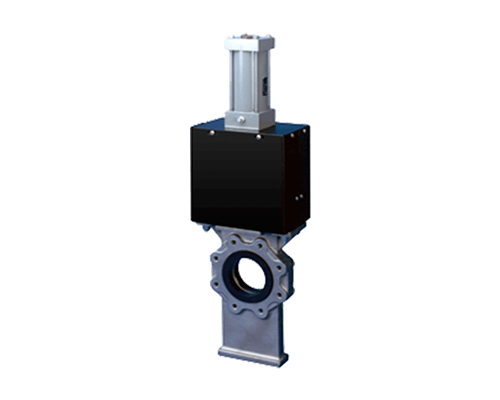
Active Isolation
Using the same suppression technologies, active isolation systems are usually connected into the suppression system of a protected vessel and activated at the same time as that of the vessel protection system.